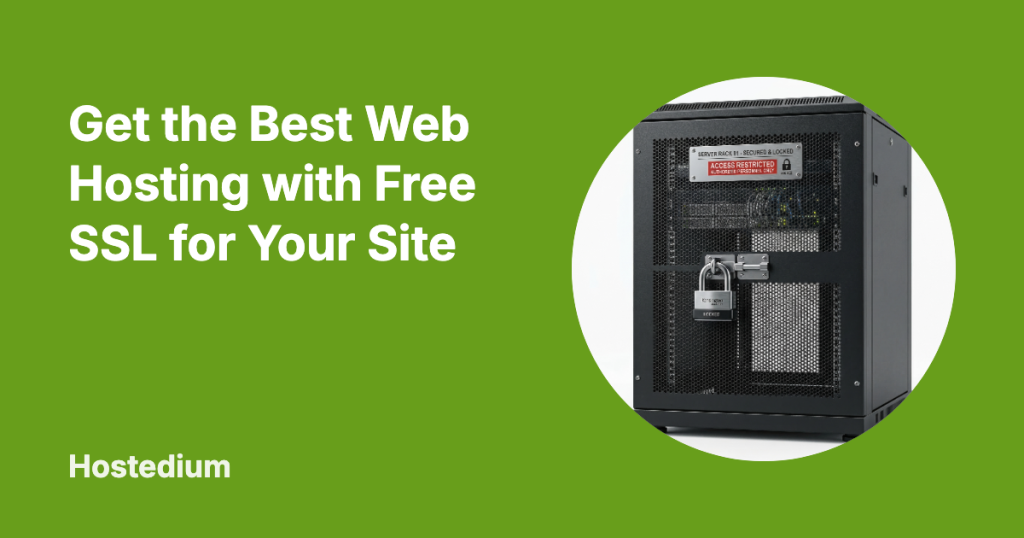

Securing your website is a mandatory step for building online trust. Web browsers now actively block or flag unencrypted sites, displaying a warning that drives potential customers away. Choosing web hosting with free ssl solves this problem instantly. It provides an automated, cost-effective way to lock down your site, protect user data, and keep your search engine rankings intact without requiring a separate annual subscription.
Why Website Security Matters from Day One
An SSL (Secure Sockets Layer) certificate creates an encrypted tunnel between your server and your visitor’s browser. This encryption ensures that data passed back and forth, like passwords or contact details, cannot be intercepted by malicious third parties. To understand the mechanics of this encryption and the handshake process that establishes secure session keys, see Cloudflare’s guide on what Transport Layer Security (TLS) is. Having this security protocol active triggers the padlock icon in the browser address bar, which is the universal symbol for digital safety.
Search engines like Google also prioritize secure websites. Since 2014, HTTPS has been a confirmed ranking signal. If two websites have identical content and authority, the one with an active SSL will rank higher. By selecting a hosting provider that bundles this feature, you automatically align your website with modern SEO best practices from the moment you launch.
Understanding Paid Versus Free Certificates
Many beginners wonder if a free certificate provides the same level of protection as a paid one. The short answer is yes. Both utilize the same 256-bit encryption standards. The primary difference lies in the validation process and the warranty provided. Free certificates are typically Domain Validated (DV), meaning the issuer simply verifies that you control the domain name. This automated process takes seconds and is perfect for blogs, portfolios, and standard business sites.
Paid certificates often offer higher levels of validation. If you run a large online store, you might need to research various ssl certificate types for ecommerce. Organization Validated (OV) and Extended Validated (EV) certificates require manual verification of your company’s legal registration, providing users with absolute certainty about who owns the website.
| Feature | Free SSL (Let’s Encrypt/AutoSSL) | Paid SSL (Premium) |
|---|---|---|
| Encryption Level | 256-bit (Industry Standard) | 256-bit (Industry Standard) |
| Validation Type | Domain Validation (DV) only | DV, OV, and EV options available |
| Issuance Time | Instant (Automated) | Minutes to Days (Depending on type) |
| Financial Warranty | None | Ranges from $10,000 to $1,500,000+ |
| Ideal Use Case | Blogs, Portfolios, Small Business | Enterprise, Banking, Large Ecommerce |
Key Features to Look For in Secure Hosting
Not all hosting providers implement free security certificates the same way. The best platforms use systems like Let’s Encrypt or AutoSSL integrated directly into their control panels. This integration means your certificates are generated automatically when you connect your domain. More importantly, they renew automatically every 90 days. You never have to worry about missing a renewal date and waking up to browser warning screens on your website.
When evaluating hosting companies, look for providers that offer one-click installations. You should also verify that their infrastructure supports the latest TLS protocols for maximum speed and security. If you are targeting a specific regional audience, understanding the requirements for an ssl certificate in pakistan can help you configure your hosting for local compliance and faster handshake speeds. A quality host will handle the technical heavy lifting, allowing you to focus purely on building your website and growing your audience.
Essential Answers About Secure Hosting Solutions
Does a free SSL slow down my website performance?
No, an SSL certificate actually improves your website speed. Modern browsers require an active secure connection to utilize the HTTP/2 and HTTP/3 protocols. These updated protocols load website assets simultaneously rather than sequentially, resulting in significantly faster page load times compared to older unencrypted connections.
Do I have to manually renew my free certificates?
Reputable hosting providers utilize automated systems that handle the entire renewal process for you. Systems like AutoSSL monitor your certificate’s expiration date and automatically request and install a new certificate before the old one expires, requiring zero manual intervention.
Is a free certificate secure enough to accept credit cards?
Yes, the encryption strength is identical to premium certificates and fully encrypts data during checkout. However, most modern ecommerce sites use third-party payment gateways like Stripe or PayPal. These processors handle the actual financial transaction securely on their own servers, removing the liability from your website.
Can I upgrade to a premium SSL later if my business grows?
You can easily replace a free certificate with a paid premium certificate at any time. If your company reaches a size where you require Organization Validation to display verified company details to your visitors, you simply purchase the upgrade and install it through your hosting control panel.
What happens if I forget to configure my SSL after buying hosting?
Top-tier web hosts automatically route all incoming traffic from the insecure HTTP version of your site to the secure HTTPS version. Even if you forget to manually configure a redirect plugin, the server-side configuration ensures your visitors always land on the encrypted version of your web pages.