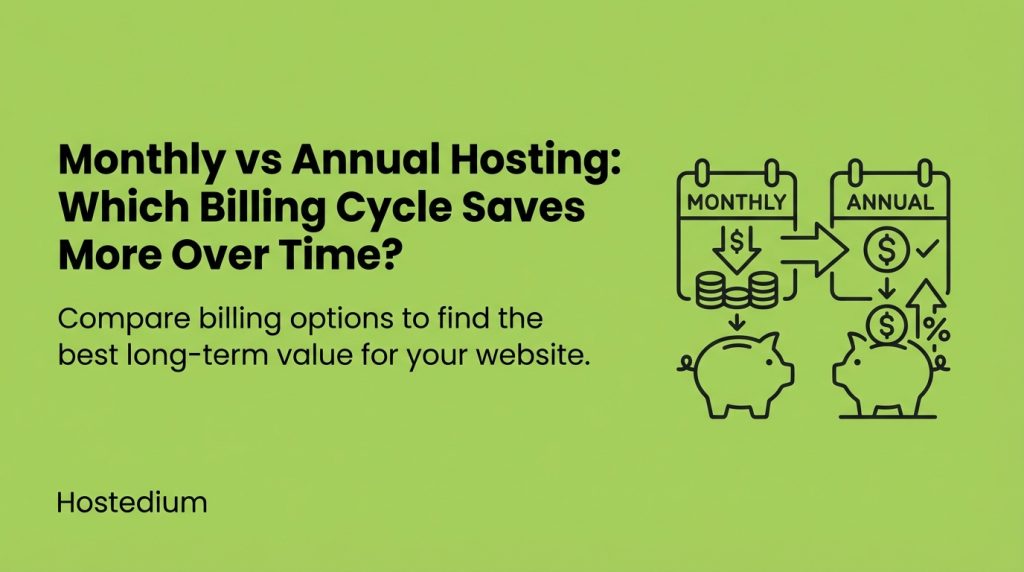

What are the real cost differences between monthly and yearly hosting?
Monthly plans charge a premium for flexibility and often cost more over a 12‑month period. Yearly plans typically require an upfront payment but reduce the effective monthly rate dramatically through discounts and bundled bonuses—so math matters more than marketing copy, sadly.
| Aspect | Monthly Hosting | Yearly Hosting |
|---|---|---|
| Typical price | $10–$20 / mo | $2.99–$7.99 / mo (billed yearly) |
| Upfront cost | Low | Higher (annual invoice) |
| Long-term cost | Higher | Lower (10–70% savings) |
| Pricing stability | May increase on renewal | Locked-in promotional term |
Many providers advertise steep introductory rates for annual plans and then renew at a higher standard price, so read renewal terms like you read a product label at the bottom of a cereal box—carefully.
According to DealFuel, yearly plans are generally more cost-effective for ongoing sites while monthly plans suit testing and very short projects.
Is yearly hosting worth the upfront payment for a small business?
Yes, if you expect the site to run beyond a few months. The upfront cost buys discounts, bundled extras, and fewer billing headaches—think of it as buying a season pass instead of single tickets, and you only need to smile at the accountant once.
However, yearly commitments are less forgiving if you decide to pivot fast. Most hosts offer money-back windows, but those don’t always cover every eventuality, which keeps things interesting during rainy-day planning.
Yearly hosting: quick pros and cons
- Lower effective monthly cost ✅
- Bundled extras (free domain, SSL, backups)
- Higher initial outlay
- Longer commitment, limited mid-term flexibility ⚠️
When should I choose monthly hosting instead?
Pick monthly billing when flexibility and cash flow control matter more than the lowest possible cost. Monthly plans are ideal for experiments, short-term campaigns, staging sites, or when you expect rapid change—like a plot twist in a TV drama.
- Short project or campaign 🚀
- Trying a new platform or CMS
- Uncertain project longevity or rapid pivoting
How do features and bonuses compare between billing cycles?
Hosts tend to use annual plans to package extras that improve value perception. You’ll see free domains for a year, premium SSL, and backup credits more often on yearly tiers.
Performance and uptime are usually identical across billing cycles; you’re paying for resources, not the calendar. The extras are the real differentiator, not faster servers—servers don’t do small talk.
Will my renewal price change if I pay monthly or yearly?
Many introductory rates apply only to the first term, whether monthly or yearly, but monthly plans often face steeper renewals in practice. Locking in a longer promotional term can delay renewal shock, but always check the post-promo price.
If you value predictability, annual billing with a known renewal date is easier to budget for; if you value flexibility, accept that your monthly bill may creep up over time.
How can I test hosting with a tight budget before committing long-term?
Use a staged approach to avoid paying for a year when the site might tank or pivot faster than you can refresh a coffee cup.
- Start monthly and run key tests (load, uptime, plugin compatibility) 🔎
- Measure performance for 30–90 days
- Switch to annual only after tests pass and traffic looks steady
How should I compare providers beyond price?
Price is just one input. Compare support response times, backup policies, refund windows, upgrade paths, and data center locations. A cheap host that leaves you stranded is false economy—like buying a bike without checking the tires.
Also consider migration costs. If switching later carries fees or downtime, that should factor into the total cost of ownership.
FAQs
Do yearly plans always save money?
Generally yes for ongoing projects, but not always—some hosts don’t offer significant discounts for yearly payment. Compare first-term and renewal pricing before committing.
Can I upgrade a monthly plan to yearly without losing data?
Yes. Most hosts allow upgrades and will prorate remaining time or apply credits toward the annual purchase. Ask support for the exact process to be sure.
What if I need to cancel an annual plan early?
Cancellation policies vary. Many providers offer a 30–45 day money-back guarantee; after that, refunds are rare. Read the terms and consider short-term testing first.
Are performance differences tied to billing cycle?
No. Performance depends on the hosting tier and resources allocated, not the billing cycle. The cycle affects cost and extras, not raw server horsepower.
Final thoughts
For most ongoing sites, annual billing saves money and adds value through bundled extras; for short-term projects and experiments, monthly billing buys flexibility and peace of mind. If you want measurable savings, compare promo and renewal prices, test first on a month-to-month plan, then move to an annual term once your site proves stable—future you will thank present you for thinking ahead. 😊
“`